












































Have you ever seen a stainless steel label shimmer in shades of blue, gold, or purple – and wondered how these colors were created without paint? That's the magic of color laser engraving. Unlike traditional laser engraving, which only produces black or grayscale markings, color engraving uses precise heat to bring out vibrant hues on certain metals.
In this beginner's guide, we will walk you through everything you need to know – from how it works and suitable materials, to the best laser machines for the job and inspiring project ideas. Whether you are new to laser engraving or looking to expand your skills, this guide is your starting point to discover the possibilities of vibrant, colorful engravings.

In this article:
- Part 1: What is Color Laser Engraving?
- Part 2: Which materials are suitable for color laser engraving?
- 🧪 Case Study: Laser Engraving Stainless Steel (5 Steps)
Part 1: What is Color Laser Engraving?
Color laser engraving is a technique that allows you to create vibrant, permanent colors on the surface of certain metals using a laser engraver. Unlike traditional engraving, which merely scratches the material to create contrast, color engraving alters the surface structure of the material, causing different wavelengths of light to be reflected – thereby producing visible colors without the use of ink or paint.

1.1 How does color laser engraving work?
Color laser engraving works by precisely heating the surface of the material with a powerful laser, usually a fiber laser. The heat changes the light reflection on the surface by forming oxide layers or modifying the surface structure. Depending on laser power, speed, frequency, and line spacing, different colors can be created – especially on metals like stainless steel or titanium.
It is a finely tuned and sensitive process that requires precise control of engraving parameters. Even small adjustments can produce completely different hues or surfaces. Therefore, modern laser software with fine parameter control is crucial to achieve beautiful and consistent color results.
1.2 Best lasers and laser engravers for color laser engraving on metal
Not all lasers are suitable for color laser engraving. Fiber lasers are best suited. Diode lasers can also produce color engravings, but require precise control of laser power and engraving depth. CO₂ lasers, on the other hand, typically cannot achieve color engraving, as they lack the necessary control or interaction with metal surfaces. Anyone serious about color engraving should therefore invest in a high-quality fiber or diode laser.
With the wide range of fiber and diode laser engravers available, some may wonder: Which laser is best for color engraving on metal? Or: Which machine engraves colors on metal best?
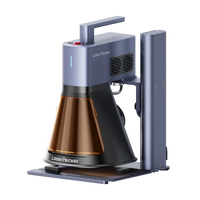
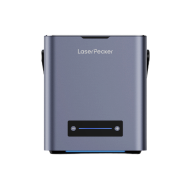
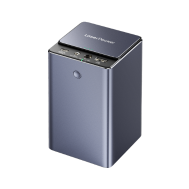
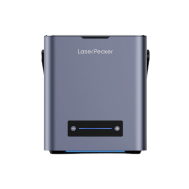
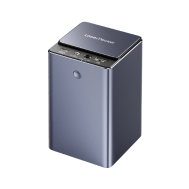
If you want to perform color laser engraving at home or on a small scale, LaserPecker LP5 or LP4 are an excellent choice. Both models feature a dual-laser system – a combination of diode and fiber laser – offering the flexibility to work with various materials like stainless steel and titanium. Additionally, LaserPecker engravers are portable, user-friendly, and cost-effective, ideal for personal use or small businesses.
Part 2: Which materials are suitable for color laser engraving?
Color laser engraving requires materials that react to heat and can produce visible color changes – typically through oxidation or structural changes on the surface. Not all materials are suitable, and the best results are usually achieved with certain metals.
Best materials for color laser engraving
1. Laser Engraving Stainless Steel
Stainless steel is one of the most popular materials for color engraving. When treated with a fiber laser, the surface forms oxide layers that display a wide spectrum of vibrant colors – from blue and purple to gold and green. Stainless steel offers excellent color consistency and durability, ideal for artworks, branding, and personalized gifts.
2. Laser Engraving Titanium
Titanium reacts strongly to laser heat and can produce an impressive color spectrum. It is often used in aerospace, jewelry manufacturing, and high-quality custom products. As with stainless steel, the colors are created by oxide layers formed at different heat levels.
Materials that are not suitable
Aluminum: Reflects light strongly and does not produce strong color effects. Better suited for deep engravings or black markings.
Copper and Brass: These metals conduct heat very well, but are less suitable for color engraving.
In summary, color laser engraving is best performed on metals that can form a stable oxide layer. Stainless steel and titanium are the top choices. For vibrant and durable results, a fiber laser – ideally with MOPA technology – should always be used to precisely control the engraving parameters.
🔨 Case Study: Laser Engraving Stainless Steel (5 Steps)
Required Materials:
- Engraving Material: Stainless steel sheet
- Engraving Machine: Fiber laser engraver (LP5 or LP4)
- Smart Engraving Software: LDS Software or App
Can you layout laser engraving with color? Absolutely! Follow these 5 simple steps to create personalized colored laser engravings.
Step 1: Choose the Right Stainless Steel for Color Laser Engraving
High-quality stainless steel for engraving is crucial for bright and consistent colors. Use sheets with a smooth, clean, and polished surface for best results. Avoid highly textured or coated surfaces, as these can impair the laser's ability to create clear color gradients.

Step 2: Select the Color Laser Engraving Machine
Here we choose LaserPecker LP5, a dual-laser multifunction engraver that is excellent for color engravings.
Step 3: Perform a Test Engraving to Obtain Color Samples on the Stainless Steel Sheet
The material test array is a powerful feature in the LDS Software and App. It allows you to see how different colors appear on your stainless steel sheet before the final engraving begins.
Here is an example of a test result with the LP5. To fine-tune the color result or personalize your settings, refer to our guide: Creating a Material Test Array for Color Engravings.
LP5 Test Results


LP5-1064nm Laser Type – 8K Resolution Test
LP5-1064nm Laser Type – 4K Resolution Test


LP5-450nm Laser Type – 8K Resolution Test
LP5-450nm Laser Type – 4K Resolution Test
Step 4: Set Up the Color Laser Engraving Machine
Once you have your color pattern, adjust the engraving parameters for your project.
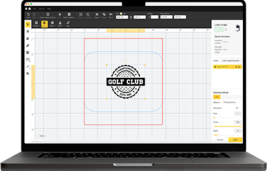
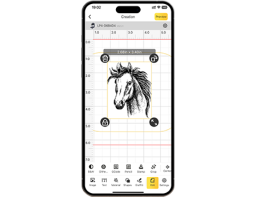
Firstly: Different areas of the image require different engraving parameters. If the image consists of a single layer, no individual parameters can be applied. Before importing, the image must be prepared: separate the colored areas into individual layers and save it as an SVG file before importing it into the LDS software.
Secondly: Import the image into the software and ungroup it. In the layers panel, you will see that the image has been divided into five layers.


Thirdly: Switch to the Engraving Layers panel. Based on the color-to-parameter mapping, click on the respective layer and adjust the processing type, laser type, resolution, frequency, power, and depth.


Finally: After setting the parameters for all layers, group the layers, adjust the image size, and center the image.

Step 5: Start Your Color Laser Engraving
Place the engraving material on the cutting plate, check the preview, and then start the engraving process. Below you can see the result of the engraving:

Tips for color laser engraving on stainless steel:
- For best results, use silver-colored stainless steel or titanium. Materials like mirror or brushed stainless steel produce different effects.
- The color change depends on many factors, such as humidity, temperature, attenuation level of the laser unit, and focal length. Ensure your work surface and the laser unit are level to avoid uneven color distribution.
- Use the LDS App for color engravings, as the PC version currently does not support parameter settings for individual layers.
- Clean the stainless steel surface before engraving. Avoid oil, fingerprints, or dust – any contamination can significantly impair the formation of the oxide layer.
- Experiment with different focus distances and resolutions. Use different laser frequencies with the 1064 nm laser and adjust the test array parameters to achieve more vibrant color blocks.
Conclusion
Color laser engraving may seem complex at first glance, but with the right tools and knowledge, it is easy to implement even for beginners. Understanding how colors are created through laser interaction with metal and choosing the appropriate machine – such as a fiber laser – can unlock a whole new creative potential.
Ready to experiment with bold color effects on stainless steel or titanium? With the tips and steps in this guide, you are well-equipped to confidently start your journey into the world of color engraving.