









































Personalizing tumblers offers a great way to showcase brands or create unforgettable gifts. Whether you want to add a name, a logo, or a unique design, customizing a tumbler is easier than ever today.
From modern laser engraving to simple DIY decals, there are many creative methods to transform a plain tumbler into a truly unique item.
In this article, we present 5 practical and creative ways to personalize your tumblers directly at home – with step-by-step instructions, pros, and cons, so you can choose the best method for your needs.

In this article:
- Method 1: Creating personalized tumblers with a laser engraving machine
- Method 2: Creating personalized tumblers with a UV printer
- Method 3: Creating personalized tumblers with Cricut
- Method 4: Creating personalized tumblers with a heat press
- Method 5: Creating personalized tumblers with water slide decals
Method 1: Creating personalized tumblers with a laser engraving machine
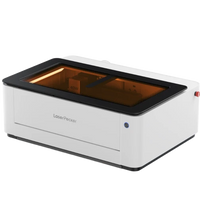
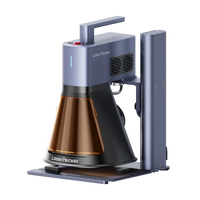
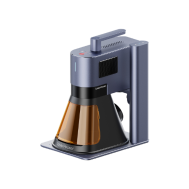
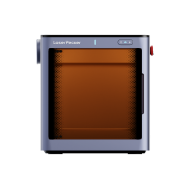
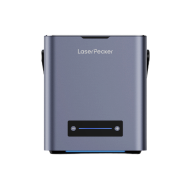
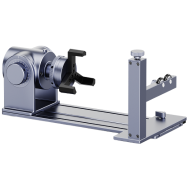
Laser engraving tumblers uses a concentrated laser beam to etch designs directly onto the tumbler's surface, creating a clean and permanent result. This method is particularly suitable for stainless steel or powder-coated tumblers. A rotary attachment ensures the tumbler rotates evenly, allowing for precise engraving. Laser engraving a tumbler offers high precision and durability and is a top choice for personalized tumbler design.
What you need for laser engraving tumblers:
- Diode or fiber laser (rotary attachment recommended for round tumblers)
- Stainless steel or powder-coated tumbler
- Masking tape or wet paper (if necessary)
- Design software (e.g., LightBurn, LaserPecker Software & App)
- Ventilation (for safety)
Step 1: Prepare the design
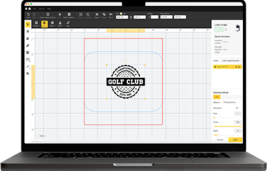
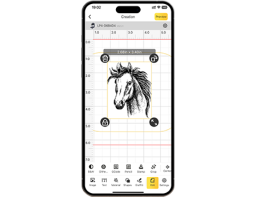
Open your design in compatible software like LightBurn or the LaserPecker app. Adjust the size to fit the tumbler and check the layout. If necessary, mirror the design or adjust its position so that it appears correctly on the tumbler.
Step 2: Set up the tumbler
Attach the rotary module and securely place the tumbler on it. Ensure the surface is clean and the tumbler is level for even rotation. A stable setup prevents misalignments.
Step 3: Adjust settings and engrave
Select the appropriate power, speed, and focus settings – stainless steel usually requires higher power. Start the engraving process and monitor it to ensure everything runs smoothly.
Step 4: Clean the tumbler
Afterward, clean the tumbler to remove any residue.
✔️ Advantages of laser engraving on tumblers
Durable & Resilient: The engraving does not peel off, fade, and is scratch-resistant.
Professional Result: Clear, detailed, and high-contrast engravings, especially on stainless steel or powder coatings.
Customizable: Suitable for text, patterns, logos, or complex designs.
No Consumables: Unlike foils or stickers, no additional materials are needed.
❌ Disadvantages of laser engraving on tumblers
Higher Initial Cost: A laser engraver with a rotary attachment can be expensive for occasional users.
Ventilation Required: Smoke or fumes may be generated during engraving – good ventilation is therefore important.
Method 2: Creating personalized tumblers with a UV printer
UV printing involves applying special ink directly to the tumbler's surface and immediately curing it with ultraviolet light. Unlike engraving, no material is removed; instead, a thin layer is applied. This method allows for full-color, photorealistic designs – ideal for smooth surfaces like metal, plastic, acrylic, or glass. While UV printing is often used commercially, compact devices are now available for home use.
Step 1: Prepare the design
Create or import your design using design software (e.g., Adobe Illustrator or your UV printer's app). Ensure high resolution, especially for photos or fine details. Export the file in the appropriate format, such as PNG or PDF.
Step 2: Set up the tumbler
Place the tumbler on the rotary device in the UV printer. Clean the surface thoroughly to ensure good adhesion. Some tumblers may require a primer or pre-treatment. Secure the tumbler and check its alignment.
Step 3: Print and cure
Select the correct print settings according to the material and ink. Start printing – the UV lamp cures the ink instantly upon application. Afterward, let the tumbler cure briefly. If desired, you can apply a clear coat for additional protection.
✔️ Advantages of UV printing on tumblers
Full-color printing: Allows vibrant colors, gradients, and photo details that engraving cannot reproduce.
Smooth Surface: The ink coating is thin and feels uniform.
Fast Process: Once set up, printing is quick and consistent.
❌ Disadvantages of UV printing on tumblers
Not entirely permanent: The ink can peel or fade over time, especially without a protective coating.
High Purchase Costs: UV printers are expensive and require special inks and regular maintenance.
Limited Durability: Less scratch- and dishwasher-resistant than laser engravings.
Method 3: Creating personalized tumblers with Cricut
Cricut machines do not engrave directly onto tumblers like lasers, but they are ideal for creating vinyl decals or stencils that can be applied to tumblers. This method is particularly suitable for beginners who want to create individual designs without investing in a laser or UV printer. You can either use vinyl directly for a colorful design or use it as a stencil for etching or painting. Especially suitable for plastic, stainless steel, or coated tumblers.
Step 1: Create the design
Use Cricut Design Space to create or upload your design. Adjust the size to fit the curved surface of the tumbler – simple and clear designs are easier to apply.
Step 2: Cut and weed vinyl
Send the design to your Cricut machine. After cutting, carefully remove excess vinyl with a weeding tool, leaving only your design.
Step 3: Apply transfer tape
Place transfer tape over the weeded design, then peel off the backing paper so the vinyl adheres to the transfer tape. This makes it easier to transfer to the tumbler.
Step 4: Transfer vinyl to the tumbler
Clean the tumbler surface thoroughly and position the design using the transfer tape. Press it firmly and smooth out air bubbles with a squeegee or credit card.
Step 5: Remove transfer tape
Slowly peel off the transfer tape, leaving the vinyl design on the tumbler's surface.
✔️ Advantages of Cricut for tumbler designs
Cost-effective & Beginner-friendly: Cricut machines are relatively inexpensive and easy to use.
Versatile: Also suitable for mugs, water bottles, glassware, and much more.
❌ Disadvantages of Cricut for tumbler designs
Not permanent: Vinyl can peel off or wear out over time, especially when washed.
Manual application: Requires careful application by hand to avoid bubbles or misalignments.
Method 4: Creating personalized tumblers with a heat press
The heat press method (also known as sublimation or heat transfer) uses heat and pressure to transfer designs onto specially coated tumblers. Tumblers with a polyester or polymer coating that reacts with sublimation ink are best suited. This technique allows for vibrant, full-color, and durable designs but requires special equipment and materials.
Step 1: Prepare the design
Create or import your design in design software. Ensure that colors and resolution are suitable for sublimation printing. Print the mirrored design onto sublimation paper with sublimation ink.
Step 2: Prepare the tumbler
Place the tumbler in the rotary attachment of the heat press or in a suitable fixture. Ensure the tumbler is clean, dry, and grease-free so that the ink transfers optimally.
Step 3: Transfer design with heat press
Wrap the printed sublimation paper around the tumbler and secure it with heat-resistant tape. Set the heat press to the recommended temperature and time values (usually approx. 200°C for 6–7 minutes). Start the pressing process so that the tumbler is heated evenly and the design is transferred.
Step 4: Remove and cool down
Carefully remove the tumbler from the press and peel off the transfer paper while it is still warm. Then let it cool completely.
✔️ Advantages of the heat press method
Vibrant Full-Color Designs: Brilliant, photorealistic results with gradients and fine details.
Durable & Dishwasher Safe: With correctly coated tumblers, the designs are wash-resistant and UV-stable.
❌ Disadvantages of the heat press method
Special tumblers required: Only works on polyester-coated surfaces.
High Acquisition Costs: Requires a heat press with a rotary attachment, as well as a sublimation printer and inks.
Precision Necessary: Temperature, pressure, and time must be precisely set, otherwise blurry or pale results may occur.
Limited Shape Variety: Large or irregular tumblers may not fit every press.
Method 5: Creating personalized tumblers with water slide decals
Water slide decals are thin, printed designs on special paper that are released by soaking in water and then slid onto the tumbler. This method allows for detailed, colorful designs with smooth edges and is ideal for DIY applications. A clear coat or epoxy resin is usually applied afterward for protection.
Step 1: Print the design
Print your design or logo on water slide decal paper using an inkjet or laser printer (depending on the paper type). Pay attention to the correct size for the tumbler.
Step 2: Prepare the tumbler
Clean the surface thoroughly to remove dust, grease, and dirt. A clean surface facilitates adhesion and prevents bubbles.
Step 3: Soak and apply the decal
Cut out the design and soak it in water for about 30 seconds. Once the decal loosens, carefully slide it onto the tumbler. Smooth out bubbles and excess water with a soft cloth or sponge.
Step 4: Dry and seal
Let the tumbler dry for several hours or overnight. For more durability, apply a layer of clear coat or epoxy resin afterward.
✔️ Advantages
Detailed Full-Color Designs: Ideal for photos, complex motifs, and gradients.
Cost-effective & Easily accessible: Only requires a printer and special paper.
Smooth Surface: The design adheres flat and even.
❌ Disadvantages
Less durable without sealing: Without a protective layer, susceptible to scratches and wear.
Careful application required: Folds, bubbles, or misalignments can easily occur.
Time-consuming: Drying and sealing time necessary for consistently good results.
Conclusion
Whether you want an elegant, professional finish or a creative, colorful design – these five methods offer something for everyone. If you value precision, durability, and versatile design, we recommend using a laser engraving machine for tumblers. It provides clean, durable results on a variety of materials – perfect for beginners and professionals alike.
Choose the method that best suits your needs – and don't hesitate to try laser engraving. This will take personalizing tumblers to the next level!