






























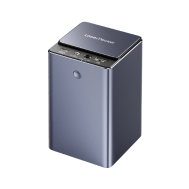













Engraving on glass is a popular method to personalize items such as home accessories, drinkware, jewelry, awards, and gifts. From engraving a name on a wine glass to engraving patterns on a vase, or even engraving glassware for businesses – choosing the right tool makes all the difference.
With the advancement of engraving technology, glass engraving has become increasingly accessible, allowing more creatives and small businesses to achieve professional results at home.
In this guide, we present the top six tools for engraving glass in 2026 and help you choose the best option for your needs, skill level, and goals.

In this article:
- Part 1: Common Use Cases for Glass Engraving
- Part 2: How to Choose the Right Glass Engraving Tool for Your Needs
- Part 3: Six Popular Tools for Engraving Glass
- Type 1: Engraving Pen with Diamond Engraving Tip
- Type 2: Carbide Scribe / Engraving Pen with Tungsten Carbide Tip
- Type 3: Electric Engraving Pen
- Type 4: Mini Rotary Tool
- Type 5: Sandblasting Gun
- Type 6: Laser Engraving Machine for Glass
- Part 4: Which Glass Engraving Device is the Best in 2026?
- Part 5: Frequently Asked Questions about Glass Engraving Tools
Part 1: Common Use Cases for Glass Engraving
Glass engraving finds application in many areas, from business to creative projects. Here are some typical examples:
- Wine, whisky, and champagne glasses with names or monograms
- Glasses, ornaments, and picture frames as special gifts
- Logos on glasses or signs for bars, cafes, and small businesses
- Vases, mirrors, or glass for decoration
- Plaques and awards
- Etched graphics for fun
There are so many texts and designs you can create, from names to flowers to company logos.
Part 2: How to Choose the Right Glass Engraving Tool for Your Needs
Before choosing a glass engraving tool (also known as a glass engraving machine), consider the following points:
- How detailed is your work? Complex artwork requires different tools than simple lettering.
- How big is the project? Engraving glasses is different from engraving large plates.
- How good are your skills? Hand tools require practice, but digital machines work precisely.
- What is your budget? Tools can range from $10 for pens to expensive laser devices.
- How much will you be engraving? Hand tools are good for one-off projects, while lasers are best for many items.
Knowing what you want to create will help you find the right glass engraving tool.
Part 3: Six Popular Tools for Engraving Glass
Here is an overview of common glass engraving tools with their respective strengths and applications.
Type 1: Engraving Pen with Diamond Engraving Tip
An engraving pen is one of the most common tools for hand engraving glass. Its extremely hard tip precisely scratches the glass surface, making it ideal for fine lines, small lettering, and simple decorative patterns.
This tool for engraving glass (also known as a glass engraving machine) is inexpensive, easy to use, and requires no electricity, making it particularly popular with beginners and hobbyists. However, since it relies solely on manual control, it is best suited for smaller projects and less for large or highly detailed designs.
These pens use a diamond tip to scratch glass. They are good for beginners.
- Suitable for drawing
- Ideal for signatures, outlines, and simple motifs
- Quiet and easy to transport as they require no power
Note that you need a steady hand, and the results may not be as consistent as with engraving machines for glass.
Type 2: Carbide Scribe / Engraving Pen with Tungsten Carbide Tip
A carbide scribe, also known as an engraving pen with a tungsten carbide tip, is a hand tool for scratching hard surfaces like glass. The extremely hard carbide tip allows for controlled, precise engraving with minimal wear over time.
Compared to a diamond pen, a carbide scribe generally feels sharper and stiffer, making it better suited for straight lines, contours, and technical markings. It is often used for labeling, scratching, or creating clean, flat engravings on glass.
While durable and cost-effective, this tool requires manual pressure and skill, making it more suitable for simple designs than complex or shaded artwork.
Type 3: Electric Engraving Pen
An electric engraving pen uses a small motor to generate rapid vibrational or rotational movements. This allows for engraving glass with less effort than manual tools, making it easier for beginners to handle and reducing hand fatigue during longer engraving sessions.
Compared to manual engraving pens, electric engraving pens produce more consistent lines and finer shading effects. They are therefore suitable for simple patterns, texts, and decorative details. Many models offer adjustable speed settings, allowing for better control over depth and line thickness.
However, precision still heavily depends on hand stability, and results are generally less fine than with professional sandblasting or laser engraving.
Best suited for: beginners, simple designs, fine shading
Limitations: limited precision, inconsistent results for complex motifs
Type 4: Mini Rotary Tool
A mini rotary tool uses high rotational speed with interchangeable engraving bits to work on glass surfaces. These tools offer more power and versatility than engraving pens, allowing users to engrave deeper lines and create a wider range of designs.
With the right diamond-coated bits, a mini rotary tool can create detailed patterns, textures, and even slight relief effects on glass. Speed control is important, as excessive speeds or pressure can lead to chipping or cracking, especially with thin glass.
While very flexible, rotary tools require a steady hand and practice to achieve clean results. They are better suited for hobbyists and small workshops than for fast or repeatable production.
Best suited for: detailed designs, deep engravings, versatile projects
Limitations: steeper learning curve, risk of chipping, less consistent results
Type 5: Sandblasting Gun
A sandblasting cabinet combined with a sandblasting gun uses high-pressure abrasive media to evenly and consistently work on glass surfaces. Instead of directly scratching the glass, this method removes material through controlled blasting, resulting in a smooth, frosted finish.
Sandblasting is often used for larger designs, logos, text, and surface finishes where uniform depth and texture are required. By using stencils or masks, users can create clean, professional-looking engravings that are difficult to achieve with hand tools.
While the result is high quality, sandblasting requires bulky equipment, adequate ventilation, and safety precautions. It also lacks the finesse of laser engraving and is less suitable for small, highly detailed artwork.
Best suited for: large designs, frosting effects, uniform surface engraving
Limitations: bulky setup, higher cost, limited detail, safety requirements
Type 6: Laser Engraving Machine for Glass
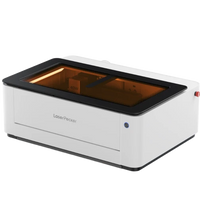
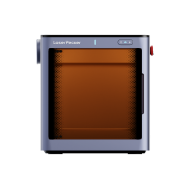
A laser engraving machine for glass uses a focused laser beam to etch or mark designs directly onto glass surfaces. It delivers precise, consistent results and can process complex patterns, texts, logos, or even photographic images.
Laser engraving is clean and fast, with minimal physical contact, which reduces the risk of scratches or breakage. Many machines allow for repeatable designs, making them suitable for both unique custom orders and series production.
Best suited for: detailed designs, logos, personalized gifts, series production
Limitations: higher initial cost, requires power and proper setup, some learning curve
Part 4: Which Glass Engraving Device is the Best in 2026?
Laser engravers for glass are the top choice for glass engraving in 2026, as they are precise, fast, and easy to use. They deliver clean, appealing results, whether you work in a small shop or are involved in large-scale production.
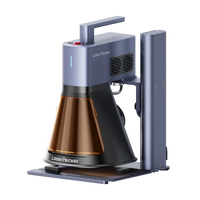
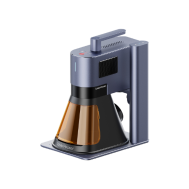
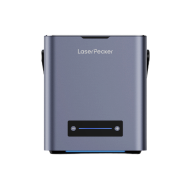
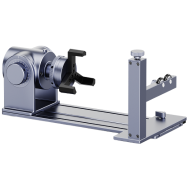
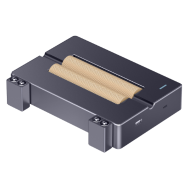
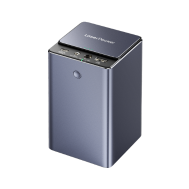
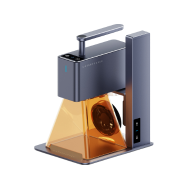
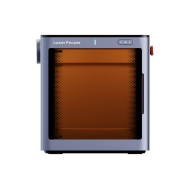
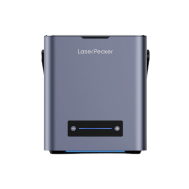
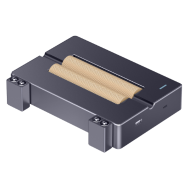
Top Choice: LP4 + LaserPecker Rotary Module
The LP4 is an excellent laser engraving machine for glass. It uses two lasers: a 10W diode laser and a 2W IR laser. For optimal results with a 450nm blue diode laser, it is recommended to use laser marking paper. Alternatively, the glass can be coated with a black marker or a washable spray. These methods contribute to a clearer and more visible image.
Here's why the LP4 is suitable for glass engraving:
- It engraves with 8K resolution, giving you very fine details.
- It engraves at a speed of 4000 mm/s, allowing for fast work.
- It engraves at different angles for uneven glass surfaces.
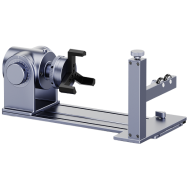
- It works with the rotary module to engrave round objects, such as:
- Wine glasses
- Whiskey glasses
- Beer mugs
- Water bottles
- Wine bottles
The LaserPecker rotary module ensures that engraving on cylindrical glass is even and without distortion. It is perfect for gifts, company logos, and small businesses.
Which type of glass is best for glass engraving?
Choosing the right type of glass affects both the image quality and the safety of your project. Some types of glass engrave beautifully, while others may crack or break under stress.
Recommended Use
These types of glass are well suited for most engraving processes and are generally safe:
- Soda-lime glass
- Borosilicate glass (like Pyrex)
- Crystal glass (lead-free is better)
- Frosted glass
- Stained glass
- Non-tempered drinkware
They show a consistent response to laser engraving and mechanical engraving.
Not Recommended Use
Only engrave these materials if you have specialized industrial tools:
- Tempered glass – It could shatter due to its internal stresses.
- Laminated glass – The inner layer could burn or melt.
- Cheap glass – Its uneven nature can lead to cracks.
- Coated glass is not suitable for engraving – Coatings can melt or emit fumes.
If possible, test your process on a spare piece first.
Part 5: Frequently Asked Questions About Glass Engraving Tools
1. What tools are needed for glass etching and engraving?
You'll need, for example, diamond pens, rotary tools with diamond burrs, possibly a sandblasting machine, or even a laser engraver. If you're just starting, a diamond pen or a rotary tool is perfectly sufficient. However, if you're a professional or run a business, a laser engraver for glass is the right choice for precise and fast results. In combination with a rotary attachment, it's particularly well-suited for curved glasses and mugs.
2. Can tempered glass be engraved?
Engraving tempered glass is difficult. It is under tension, so even a small scratch can cause it to shatter. Large factories have machines that can do this, but your home tools, such as lasers, probably shouldn't venture into this material. To be safe, just use regular glass.
3. What are common mistakes when engraving and etching glass?
Typical mistakes include applying too much pressure, choosing the wrong burr, etching on the wrong glass, forgetting safety masks, and incorrect laser settings. Beginners often skip cleaning, which leads to scratches or strange lines. Testing your settings first can help you avoid ruining something.
4. What is the difference between etching and engraving?
Essentially, etching is like lightly abrading glass with chemicals or abrasive media to remove a tiny part of the surface. Engraving, however, is more intense – it involves cutting deeper with tools like burrs or lasers. Etching usually creates a frosted look, while engraving leaves bolder, longer-lasting marks.
5. Is laser engraving on glass better than hand engraving?
Laser engraving? It’s ideal for logos and if you need to create the same design over and over again. You get very sharp, consistent results quickly – especially if the object to be engraved is curved. Hand engraving? It’s cool if you want something artistic and unique. Both engraving methods have their advantages, but if you want speed and super sharp details, laser engraving is clearly the better choice.
Conclusion
from gifts to branded glassware. While manual and electric glass engraving tools are suitable for beginners and occasional projects, they have limitations in terms of precision, speed, and consistency.
For anyone looking to sell engraved glass or produce it in series, laser engravers for glass are the best long-term choice in 2026. Glass engraving devices (also known as glass engraving machines) like the LaserPecker LP4 deliver professional results with high accuracy, fast engraving, and flexible accessories – making high-quality laser engraving on glass accessible to small businesses and manufacturers alike.