





















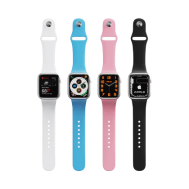























A watch is not just a tool to tell time; it's a piece of history on your wrist. A personalized watch can be a special gift, a great achievement, or simply a thank you.
An engraving on a wristwatch makes it truly personal. Before adding that message or initials, you should know what to consider, what engraving options you have, and how to avoid damage to your watch or its warranty.
In this guide, we'll explain why engraving a watch is a good idea. We'll introduce you to the different methods, show you the pros and cons of each process, and explain how to safely get your watch engraved.

In this article:
- Part 1: Why Engrave a Watch?
- Part 2: 5 Methods for Engraving Watches
- Method 1: Laser Engraving
- Method 2: Hand Engraving
- Method 3: Mechanical Engraving (CNC/Hob)
- Method 4: Chemical Etching
- Method 5: Electrochemical Etching
- Part 3: How to Engrave a Wristwatch with LaserPecker LP5
- Part 4: Tips for Engraving a Watch
- Part 5: Frequently Asked Questions about Engraving a Wristwatch
Part 1: Why Engrave a Watch?
An engraving adds a personal touch to your watch and strengthens your bond with it. Here are some reasons why people engrave their watches:

- Personalize your watch: Add your initials, name, or important dates.
- Commemorate important moments: Mark anniversaries, graduations, or achievements.
- Give it meaning: A short message can make a watch a valuable gift.
- Brand promotion: Companies engrave watches for awards or gifts.
- Create a family heirloom: Pass a message down through generations.
Engravings are special, but be careful. The wrong method or placement can affect the watch's appearance or water resistance. Let's look at how professional engravers do it right.
Part 2: 5 Methods for Engraving Watches
There are various ways to engrave a watch, depending on its material, your budget, the desired look, and the level of detail. Each method has its own advantages.
Method 1: Laser Engraving
Laser engraving on a watch uses a powerful beam from a laser engraver to precisely vaporize the material on the watch's surface. This method is clean and fast, suitable for both lettering and images. Fiber lasers are often used for metals like stainless steel and titanium. Diode lasers work well for coated surfaces, leather, and plastics.
Method 2: Hand Engraving
Hand engraving is the oldest and most artistic way to decorate objects. Skilled craftsmen manually cut patterns into metal with tools. This creates distinctive lines that cannot be achieved in any other way – ideal for high-quality or classic items.
Method 3: Mechanical Engraving (CNC/Hob)
Mechanical engraving involves cutting patterns into metal with a cutting tool or a CNC machine. This creates deep, uniform engravings that look the same every time, making this method suitable for producing many items or for industrial branding.
Method 4: Chemical Etching
Chemical etching involves protecting certain areas while acid or chemicals dissolve the exposed metal. This method is well-suited for flat, decorative markings and leaves a smooth, matte finish.
Method 5: Electrochemical Etching
This method uses electricity and special liquids to cut designs into metal through a stencil. It is often used to apply serial numbers, logos, or detailed markings on stainless steel parts.
| Method | Best suited for | Depth / Detail | Speed | Cost | Risk |
|---|---|---|---|---|---|
| Laser Engraving | Most metals and coatings | Precise, adjustable | ★★★★★ | €€ | Very Low |
| Hand Engraving | Luxury & artistic pieces | Deep, unique | ★ | €€€ | Medium |
| CNC | Mass production / industrial manufacturing | Deep, consistent | ★★★★ | €€ | Medium |
| Chemical Etching | Light marks on metal | Flat | ★★★ | € | Low |
| Electrochemical Etching | Logos / serial numbers | Flat | ★★★★ | €€ | Low |
Laser engraving is the most versatile and precise method, delivering clean, consistent results on metals, coatings, and leather. It's faster and safer than manual, mechanical, or chemical processes, making it ideal for customizing watches, both for private and professional use.
Part 3: How to Engrave a Wristwatch with LaserPecker LP5
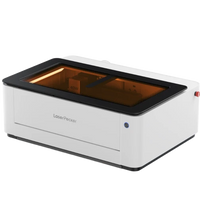
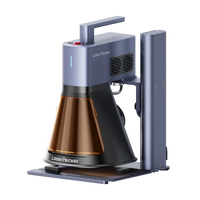
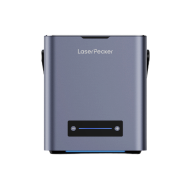
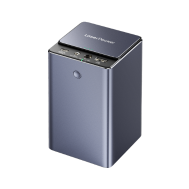
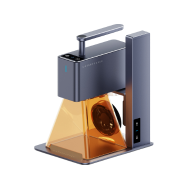
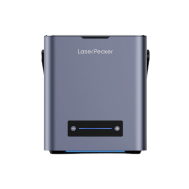
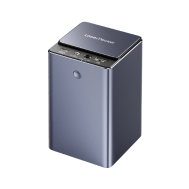
LaserPecker LP5 features both a 20W fiber laser (1064 nm) and a 20W diode laser (450 nm). This means you can engrave everything from metal to other materials with a single device. Here’s how to get a professional-looking engraving on your watch:
Step 1: Plan it
Choose what you want to engrave (e.g., a name, date, or logo) and where it should be placed. The back of the watch is the easiest spot. If you want to engrave the clasp or strap, you might need a special flexible fixture system from LaserPecker.
Step 2: Prepare the surface
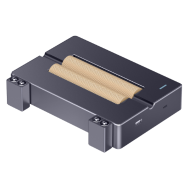
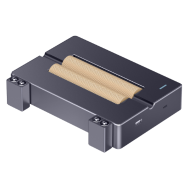
Wipe the area with alcohol to remove any oil or dust. Secure the watch with a clamp or a flexible fixture system from LaserPecker so it doesn’t move.
Step 3: Choose the right laser
Fiber laser (1064 nm): Best suited for metals like steel, titanium, or gold.
Diode laser (450 nm): Works well for coatings, leather straps, plastics, or painted surfaces.
Step 4: Adjust settings
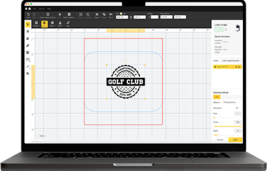
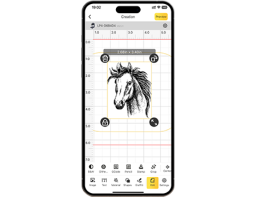
Use LightBurn or LaserPecker Design Space to set the power, speed, and number of passes. Test it on a scrap piece of material first to ensure you get the desired result.
Step 5: Safely engrave a watch
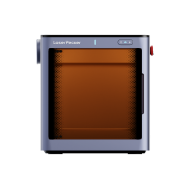
Use the safety cover to ensure the LP5 is safe enough to use at home, in a studio, or even in a shop. Start engraving and monitor the results.
Step 6: Check and clean
After engraving, check that the result is clear and even. Carefully remove any residue and do not polish the engraved area immediately.
Why choose LP5:
- It has two lasers for use on all types of materials.
- It is super fast, with speeds up to 10,000 mm/s.
- It can engrave deeply, emboss, and cut.
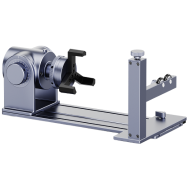
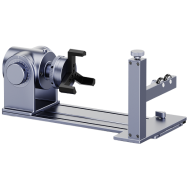
- You can add a rotary module for round items like rings, cups, and bracelets.
- There is a slide extension that allows you to expand the working area (160 × 300 mm).
- It works with LightBurn for a smooth, professional process.
All of this makes the LP5 a great tool for watch enthusiasts, small shops, and businesses that create personalized items.
Part 4: Tips for Engraving a Watch
- Before you begin, test your settings on an item similar to the watch.
- Do not engrave too close to seals unless you can have the watch re-sealed by someone knowledgeable.
- When working with curved watch straps or clasps, use a flexible fixture from LaserPecker to keep everything in focus.
- For PVD/DLC coatings, work with low power and high speed to avoid damage.
- Keep your designs simple and appropriately sized – small watches need small text.
- Ensure good ventilation and wear protective eyewear when using the laser.
- Take a photo of your engraving for your records or if you plan to resell the watch.
Part 5: Frequently Asked Questions about Engraving a Wristwatch
1. Can every watch be engraved?
Most watches can be engraved, but not every watch is equally suitable. Flat case backs or clasps made of stainless steel work best. Very curved surfaces or materials like ceramic and sapphire are more difficult and require special equipment. Very thin or delicate watches also carry a higher risk of damage. If you are unsure, consult a professional or the manufacturer beforehand.
2. Does an engraving affect the warranty or water resistance?
An engraving can affect the warranty, especially if the case needs to be opened. If only the exterior is engraved, such as the case back or clasp, the watch usually remains unharmed. To be safe, a tightness or pressure test is recommended after engraving.
3. How much does watch engraving cost and how long does it take?
A simple laser engraving, such as initials or a short date, usually costs between 30 and 100 Euros and is often done within an hour. Intricate hand engravings are significantly more expensive and can take several days. Additional steps like disassembling the watch or a water test extend the processing time.
4. Can PVD/DLC or ceramic watches be engraved?
Yes, but with caution. PVD or DLC coatings are very thin. Engraving can expose the underlying metal, which can be visually appealing but reduces protection. A fiber laser is suitable for clean results. Ceramic watches require special lasers and should not be engraved with conventional tools.
5. Where is an engraving better: case back or clasp?
The case back is ideal for personal and discreet engravings, such as a private message. However, there is a higher risk to water resistance. The clasp or strap is safer to engrave and clearly visible, but offers less space. The best choice depends on whether the engraving should be private or visible.
Conclusion
An engraved wristwatch adds a personal touch, whether it's a symbol or a memory. With tools like the LaserPecker LP5, anyone can safely engrave metal, leather, or coated materials and achieve great results. Whether it's one gift or many, personalization is easy and precise with the LP5.