



















































Plastic is a versatile material used in countless applications – from DIY projects and crafts to professional signage and prototypes. Cutting plastic correctly is crucial for achieving clean edges, precise shapes, and professional results. The ideal method depends on the type of plastic, its thickness, and the required level of precision.
This guide presents four effective methods for cutting plastic – from state-of-the-art laser technology to simple scoring with a utility knife. This will help you choose the method that best suits your project and your cutting tools.

This article contains:
- Method 1: Cutting plastic with a laser cutter
- Method 2: Cut plastic with a utility knife
- Method 3: Cutting plastic with a saw
- Method 4: Cutting plastic with string
Method 1: Cutting plastic with a laser cutter
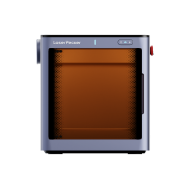
Laser cutters use a focused beam of light to cut plastic with high precision.
Laser cutting of plastics is ideal for creating clean, intricate shapes and designs without the need for additional post-processing. Laser cutting of plastics works well with many thermoplastics; however, some materials, such as PVC, should never be used because they release toxic fumes.
Best suited for:
- For cutting thin to medium-thick plastic sheets.
- Elaborate designs, patterns and special shapes
- Projects that require smooth, polished edges directly from the machine
Precision level when cutting plastic with a laser cutter
Very high — Can achieve fine details and consistent, repeatable cuts
Edge quality when cutting plastic with a laser cutter
High — Produces smooth, clean edges; usually requires little to no post-processing.
Best thickness range
Typically 1 mm – 12 mm (1/32″ – 1/2″), depending on the laser power and the type of plastic. Cutting thicker plastic may require multiple passes or more powerful machines.
Advantages and disadvantages of cutting plastic with a laser cutter
Advantages
- Extremely precise and repeatable
- Clean, polished edges with minimal post-processing effort
- Complex shapes and designs can be easily cut.
Disadvantages
- Not suitable for plastics that release toxic gases (e.g. PVC)
- Fumes will be produced – good ventilation is required.
Method 2: Cut plastic with a utility knife
Cutting plastic with a utility knife is a simple and inexpensive method best suited for thin sheet materials. The process typically involves scoring several times along a straight line and then snapping the plastic along the scored line.
This method requires few tools, produces no noise and is ideal for small, precise work on softer plastics.
Best suited for:
- Cut thin plastics, such as acrylic, polystyrene, PVC or PETG.
- Straight cuts in small projects
- Quick adjustments or cutting directly on site
Precision level when cutting plastic with a utility knife
Medium — Accurate for straight lines when using a ruler or guide; not suitable for curves or intricate shapes.
Edge quality when cutting plastic with a universal knife
Medium-low — The broken edges are functional, but may need to be sanded for a clean, smooth finish.
Best thickness range
Up to 3 mm (1/8″) for most plastics. Some softer plastics can be cut up to approximately 5 mm with patience and multiple scoring passes.
Advantages and disadvantages of cutting plastic with a utility knife
Advantages
- Portable and easy to use
- Quiet and dust-free
Disadvantages
- Suitable only for thin plastics
- Practically only suitable for straight cuts
- For harder materials, several passes and more force are required.
Method 3: Cutting plastic with a saw
Cutting plastic with saws is a versatile and reliable method suitable for various types and thicknesses of plastic.
Common tools include handsaws, circular saws, jigsaws, and table saws with fine-toothed blades specifically designed for plastic or soft materials. This method is particularly suitable for straight cuts, larger workpieces, and projects requiring medium precision.
Best suited for:
- Medium to thick sheets or blocks of plastic for cutting.
- Straight or slightly curved cuts
Precision level when cutting plastic with a saw
Medium to high — Accurate when using suitable guides, stops or fixtures; less suitable for delicate, detailed shapes.
Edge quality when cutting plastic with a saw
Medium — The edges may have saw marks and may need to be sanded or polished; if the saw blade is unsuitable or the feed rate is incorrect, there is a risk of chipping.
Best thickness range
Works well for thin to thick plastics: 2 mm – 25 mm (1/16″ – 1″). Very thin sheets may crack if not adequately supported.
Advantages and disadvantages of cutting plastic with a saw
Advantages
- Efficiently handles larger and thicker workpieces
- Allows for straight or simple curved cuts.
- Suitable for a wide variety of plastic types
Disadvantages
- Edges usually need to be reworked.
- Not ideal for delicate or detailed shapes.
- It creates dust and noise
Method 4: Cutting plastic with string
Thread cutting is a heat-based method for cutting soft plastics. A taut thread or wire is heated and passed along the desired line through the plastic, causing it to melt. This technique is simple and requires no elaborate tools, but is best suited for thin, soft plastics and less so for hard or rigid materials.
Best suited for:
- Soft thermoplastics such as thin PVC, polyethylene or polypropylene
- Small cuts where precision is less critical
Precision level when cutting plastic with string
Low-medium — Suitable for simple straight cuts, but fine details or curves are difficult to control precisely.
Edge quality when cutting plastic with string
Low to medium — The edges may be rough, slightly melted, or uneven; sanding or filing is usually required afterwards.
Best thickness range
Up to 5 mm (1/4″) for most soft plastics. Not suitable for hard or thick sheets.
Advantages and disadvantages of cutting plastic with string
Advantages
- Affordable and easy to set up
- No power tools required
- Fast for small or thin workpieces
Disadvantages
- Suitable only for soft, thin plastics
- Edges often need to be reworked.
- Fumes are produced – ventilation is required.
Conclusion
Each method for cutting plastic has its own particular strengths and limitations. While laser cutting of plastics impresses with its precision and smooth, clean edges, utility knives and scoring are quick and cost-effective options for thin sheets. Saws efficiently handle larger or thicker pieces, and hot wire cutting offers a simple, heat-based solution for soft plastics.
By understanding these techniques and their best applications, you can choose the right method to achieve clean and precise cuts, bringing your plastic projects to life.