


Aluminum sheets are great. They are lightweight, strong, and rust-proof, so they are used everywhere from factories to DIY projects. To achieve a beautiful, clean cut, you just need to know how.
This article will introduce some common methods for cutting aluminum sheet metal and explain why lasers are usually the best choice. I will also explain the simple steps of laser cutting aluminum, share some professional tips, and even recommend some aluminum cutting machines.

In this article:
- Part 1: Why cutting aluminum sheets is a challenge
- Part 2: Overview of methods for cutting aluminum sheet metal
- Part 3: How to cut aluminum sheet metal with a laser machine (step-by-step)
- Part 4: Tips for perfect laser cutting of aluminum sheet metal
- Part 5: Recommended aluminum laser cutters
- Part 6: Frequently Asked Questions about cutting aluminum with a laser
Part 1: Why cutting aluminum sheets is a challenge
Aluminum seems easier to cut than steel because it is softer and lighter. However, cutting aluminum presents a number of problems:
1. Thermal conductivity:
Aluminum has excellent thermal conductivity. When cutting aluminum sheets, the heat generated by friction is absorbed by the metal and quickly dissipated. This can lead to deformation, especially with thin sheets. High temperatures can also damage the cutting blade.
2. Softness
Although aluminum is strong, it is also soft, which makes cutting difficult. The material can become sticky, leading to friction and heat generation. This can result in an uneven cut. In addition, rough edges can easily form, which you then have to file down.
3. Hardening
Cutting can change aluminum. When the metal is stressed by the heat and friction of the blade, it becomes harder. The area around the cut becomes stronger, but also more prone to breakage. This can make re-cutting more difficult and lead to a less consistent result.
4. Thickness
Aluminum sheets come in all possible sizes, thin or thick. You can't simply use a single cutting method for everything. What works for a thin sheet may be useless for a thick one. Also, some aluminum alloys are hard, some are soft – all of this influences how you need to cut them.

So you need to choose the right cutting method and tools for cutting aluminum if you want to achieve a clean cut. If you make mistakes, you can damage both the aluminum and your tools.
Part 2: Overview of methods for cutting aluminum sheet metal
There are various methods for cutting aluminum sheets, from simple hand tools to aluminum cutting machines. Let's look at some common methods and examine their advantages and disadvantages.
| Methods | Advantages | Disadvantages | Best suited for |
|---|---|---|---|
| Hand tools (shears, saws) | Cost-effective, easily accessible, no power required | Slow, labor-intensive, uneven edges | DIY projects, thin sheets (<2 mm) |
| Shears | Fast, clean, straight cuts without heat | Only suitable for straight cuts, limited flexibility | Industrial straight-line cutting |
| Jigsaw / Bandsaw | Can cut curves, relatively inexpensive | Rough cut edges, risk of blade wear | Complex shapes, prototypes |
| CNC Milling | Highly precise, repeatable cuts | High costs, slow process, requires expertise | Complex shapes, prototypes |
| Plasma cutting | Cuts thicker aluminum relatively quickly | Lower precision, rough cut edges | Heavy metal processing |
| Waterjet cutting | Extremely precise, no heat deformation | Very expensive, high space requirements | Aerospace, industrial applications |
| Laser cutting | Highly precise, clean edges, very flexible | Higher investment costs, thickness limitations | High-quality, detailed cuts |
According to this table, laser cutting offers the best combination of accuracy, clean cuts, and versatile applications. It's a good choice if you're a manufacturer, designer, or producer looking for precise cuts and minimal post-processing.
Part 3: How to cut aluminum sheet metal with a laser machine (step-by-step)
Laser cutting aluminum is quite simple once you get the hang of it. Here's a simple step-by-step guide to get you started:
1. Prepare your design
Use graphic design software (like LaserPecker Design Space or LightBurn) to create or upload your design. Then save it as a laser-friendly file, such as DXF, SVG, or AI.
2. Choose the right laser
A fiber laser cutter is best suited for metals like aluminum. Diode lasers can process thin materials. Your machine should have sufficient power (at least a 20W fiber laser for thin aluminum).
3. Secure the aluminum
Place the aluminum sheet on the laser table and clamp it securely or use magnets to prevent it from moving. Keep it flat to achieve clean cuts.
4. Adjust the laser
Set power, speed, and frequency according to the thickness of the aluminum. For thin aluminum (under 1 mm), use lower power and higher speed. Then test your settings on a piece of scrap aluminum first.
5. Start cutting!
Now you can start cutting. Watch out for flames, sparks, or deformation.
6. Finish
Check the edges for rough spots. Sand them if necessary. Don't forget to remove any residue from the surface.

Part 4: Tips for perfect laser cutting of aluminum sheets
Do you want to achieve fantastic laser cuts even with a really good machine? Here are some simple tips to make your aluminum cuts look their best:
Air assist is your friend
Using oxygen or nitrogen helps blow away the molten parts. This means less contamination and cleaner edges.
Clean your lenses
A dirty laser lens can lead to errors. Keep it clean for the best accuracy.
Stay cool
Aluminum conducts heat very well. Make sure your machine's cooling system is working properly.
Test it
Don't ruin your good stuff! First, try cutting some scrap pieces to adjust your settings.
Consider the thickness
Normal lasers are suitable for aluminum up to 1 mm thick. Do you have thicker sheets? Then you need a more powerful industrial laser.
Pay attention to safety
Always wear safety glasses. Ensure good ventilation and monitor the machine during operation.
Part 5: Recommended aluminum laser cutters
If you're serious about cutting aluminum, a good laser cutter is important. One of the best options currently available is the LaserPecker LP5 Laser Cutter.
This machine was developed as the most powerful, lightest and most compact engraver in its class. It is not only a powerful tool, but also a versatile and reliable solution for a variety of materials and applications.
The LP5 stands out with its innovative dual-laser technology:
20W Fiber Laser (1064 nm): This laser is your first choice for cutting and engraving metals. It is perfect for cutting thin sheets of aluminum, stainless steel, brass, and titanium.
20W Diode Laser (450 nm): This laser is ideal for non-metallic materials such as wood, acrylic, leather, and more, offering you the flexibility to tackle almost any project.
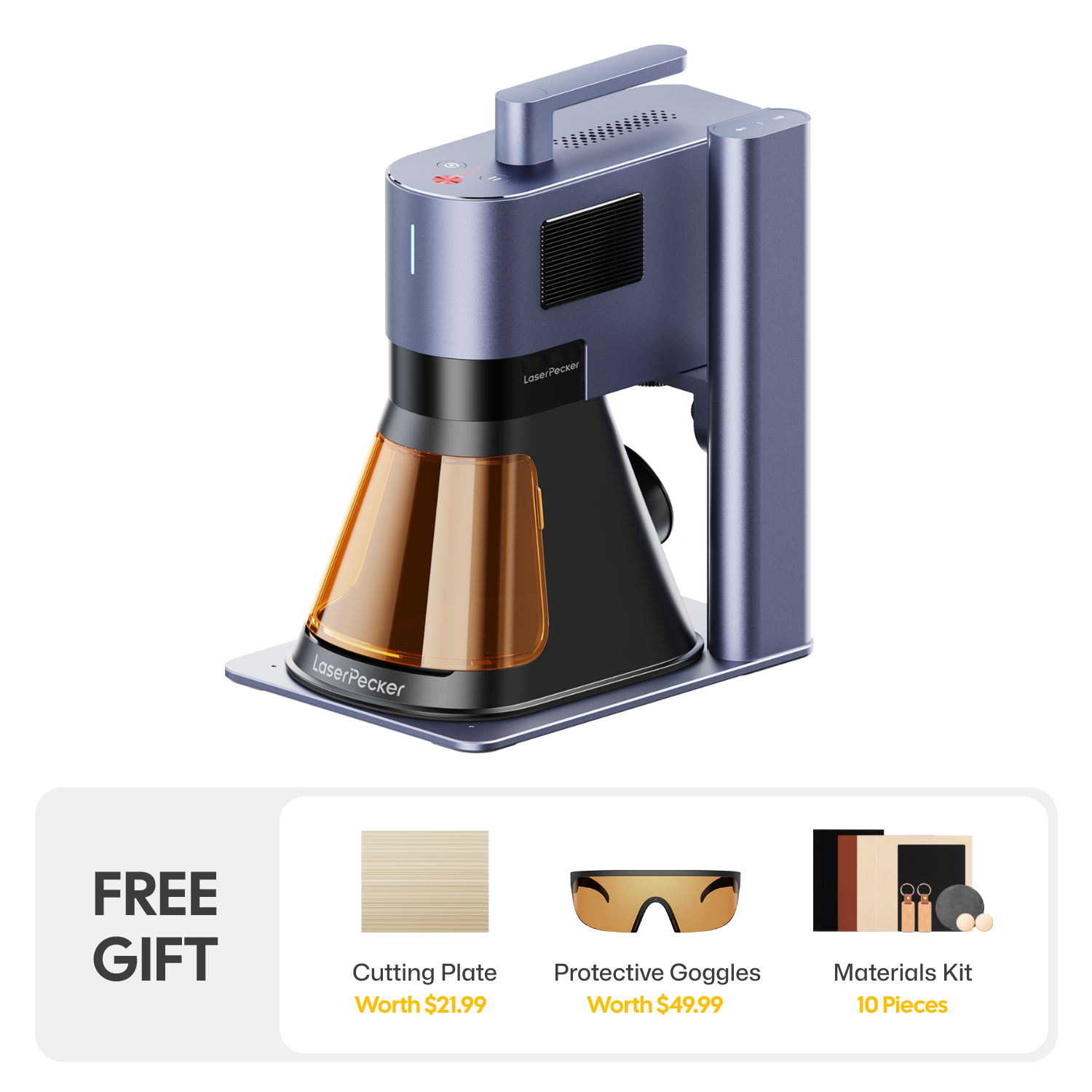
What LP5 can do
Engrave: Use the fiber laser for bare and coated metals, plastics, and leather, or switch to the diode laser for materials like painted metal, wood, and more.
Cut: The fiber laser can cut aluminum, brass, stainless steel, and titanium sheets up to 1 mm thick. The diode laser can cut dark acrylic up to 15 mm thick and basswood up to 20 mm thick.
In addition to its dual-laser system, the LP5 has numerous features that enhance its performance and ease of use:
Key Information
- Small, light, and powerful: Easy to transport, yet powerful.
- Fast: Engraves at speeds of up to 10,000 mm/s.
- Cutting depth: Creates detailed 3D designs and clean cuts.
- Use with accessories for optimal results: Use sliding or rotary tools for large or round projects.
- Easy to operate with software: Compatible with LightBurn and LaserPecker Design Space.
- Safe for indoor use: Thanks to its safety cover, it is safe for workshops and classrooms.
As a versatile, powerful, and easily transportable machine, the LP5 is a good choice for cutting aluminum and other materials.
Part 6: Frequently Asked Questions about cutting aluminum with a laser
1. Can I use any laser cutter for aluminum?
Not quite. When it comes to aluminum, not all lasers are created equal. Diode lasers? They are suitable for marking aluminum if it is coated, as they can change the surface color. However, if you actually want to cut or deeply mark the metal itself, you need a fiber laser.
Fiber lasers concentrate energy into a tiny spot, melting the metal away. If you're doing this as a hobby, you should get a diode+fiber configuration. You can switch to the diode for other work and then use the fiber to cut thin metal or make permanent marks.
2. What is the maximum aluminum thickness a laser can cut through?
How thick you can cut depends on the laser's power and the lenses. Smaller fiber lasers are typically suitable for thin sheets with a thickness of about 0.5 to 1.0 mm. However, stronger lasers with good gas can cut even more.
3. Do I need gas if I want to laser cut aluminum?
Yes, gas improves metal cutting. Oxygen can speed up the process by reacting with the metal, but it can leave stains on the edges. Nitrogen prevents these stains from forming, so the edges look clean. For simple jobs, compressed air may be sufficient for rough cuts. However, if you want a professional result, you should use nitrogen.
4. Is laser cutting aluminum safe?
Laser cutting can be safe if done correctly. Metals reflect the laser, so use machines designed for metal cutting and ensure adequate safety.
Always ensure good ventilation of your workspace, as cutting some materials produces strong smoke. Wear the correct protective equipment. In addition, the machine should be enclosed during operation, and the emergency stop switches must be functional. Enclosed machines pose less risk and are therefore a good choice for schools or businesses.
5. Why prefer laser cutting over plasma or waterjet cutting?
All methods have their advantages. Plasma is fast and not overpriced for cutting thick metals, but expect rough edges. Waterjet cutting uses no heat and can cut very thick materials, but the machines are large and expensive to operate.
Laser cutting is well suited for thin to medium-thick metals and for details. It provides a fine cut, no worn tools, and very fine details. It is a good choice for signs, precise parts, and decorations.
Conclusion
Cutting aluminum sheets can be difficult because the material is soft, conducts heat, and tends to form annoying burrs. Don't worry, with the right aluminum cutting tool, you can achieve excellent cuts. Saws and shears sometimes work, but laser cutting is usually the most accurate and best method.
If you're just starting, the LP1 Pro is an affordable and easily transportable option for trying out laser engraving. If you run a business, the LP4 is faster, works with all types of materials, and gets the job done right.
With a good aluminum cutting machine like the LP5, you can cut and mark aluminum sheets with great accuracy. It is suitable for both private use and the production of a wide range of products.


