
















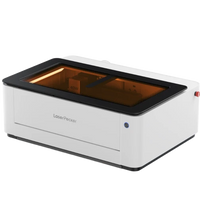
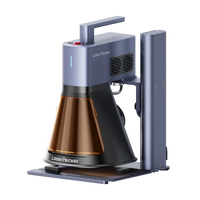

























A hoodie doesn't just keep you warm – it also shows who you are. With a custom-designed hoodie, you can express your personal style, promote a brand, or create a unique gift. With tools like the LaserPecker LP4, it's easier than ever to design your own hoodie and turn a plain piece of clothing into a true statement piece.
In this article, you'll learn why personalized hoodies are so popular, what DIY methods and techniques for hoodie design exist, and how you can customize a hoodie with a laser engraver.

In this article:
- Part 1: Why Personalized Hoodies Are So Popular
- Part 2: 7 Methods to Customize Hoodies
- Method 1:Laser Engraving
- Method 2:Direct-to-Garment Printing
- Method 3:Direct-to-Film Printing
- Method 4:Screen Printing
- Method 5:Embroidery
- Method 6:Sublimation Printing
- Method 7:Hand Painting
- Part 3: How to Design Your Own Hoodie with the LaserPecker LP4
- Part 4: Common Mistakes to Avoid
- Part 5: FAQs on Creating Personalized Hoodies
Part 1: Why Personalized Hoodies Are So Popular
Personalized hoodies are trending – and for good reason. They are comfortable and also offer a large surface area where you can display your personality. From inspiring quotes to company logos, almost any motif can be realized.

Social media and the desire for individuality also contribute to their popularity. Many people want to wear clothing that stands out from the crowd. Small businesses can also use hoodies as branded merchandise and turn their customers into mobile advertising vehicles.
Thanks to modern processes like laser engraving and direct-to-garment printing, private individuals can now create custom hoodies at home and achieve professional-looking results.
Part 2: 7 Methods to Customize Hoodies
There are various ways to apply text or images to a hoodie. Each technique differs in terms of cost, durability, material suitability, and effort. Below is an overview of the seven most common methods.
Method 1: Laser Engraving
Laser engraving allows for particularly precise personalization of hoodies. A focused laser beam precisely removes the top layer of material, creating a permanent mark. This method is suitable for simple lettering as well as distinctive motifs.
Ideas for Laser-Engraved Hoodie Designs:
1. Text: Add words, phrases, or names. Engraved text appears clear and permanent.
2. Logos: Ideal for teams and brands. Laser engraving accurately reproduces fine lines and small details.
3. Images: Engrave illustrations, symbols, or photos. Light and dark gradations can create an artistic effect.
4. Patterns: Textures, frames, and geometric elements give the hoodie a modern look.
5. Signatures: A scanned signature can be transformed into a personal engraving and is particularly well-suited for gifts.
Laser engraving is a durable method for embellishing clothing. The motif will not peel or fade like a printed design. After purchasing a laser engraver, ongoing costs are low, as no inks or printing chemicals are required.
Furthermore, since no dyes or solvents are needed, laser engraving is particularly suitable for individual pieces, small series, and designs that need to be permanently preserved.
Method 2: Direct-to-Garment Printing
Direct-to-Garment printing, or DTG, works similarly to an inkjet printer for textiles. The ink is sprayed directly onto the fabric.
This method is excellent for detailed, colorful motifs with a soft surface. Since the ink penetrates the fabric, there is no strong raised or plastic-like feel. DTG is ideal for photorealistic designs, color gradients, portraits, and complex illustrations.
The best results are achieved on cotton hoodies. However, setup and ink can be more expensive than other methods. In return, DTG offers high print quality and great creative freedom.
Method 3: Direct-to-Film Printing
Direct-to-Film, or DTF, is particularly versatile. The motif is first printed onto a special film, then coated with an adhesive powder, and finally transferred to the hoodie with heat.
DTF delivers vibrant colors on many materials, including cotton and polyester blends. The prints are durable and withstand many washes when processed correctly. Since DTF is suitable for numerous fabric types and small quantities, this method is particularly interesting for small clothing brands and on-demand production.
Method 4: Screen Printing
Screen printing is a proven method for textile finishing. A separate stencil or screen is created for each color, through which the color is pressed onto the fabric. This creates vibrant and durable prints.
Screen printing is especially economical for larger quantities. Once the screens are prepared, many identical hoodies can be produced efficiently. The process is suitable for numerous fabric types and produces rich colors with a slightly palpable surface.
This makes screen printing a good choice for companies, schools, clubs, and groups that need merchandising items, promotional hoodies, or uniforms in larger quantities.
Method 5: Embroidery
Embroidery gives hoodies a high-quality, handcrafted look. Instead of printing colors, the motif is stitched directly into the fabric with colored thread, creating a slightly raised texture.
Since the thread is firmly attached to the hoodie, embroidered motifs are particularly durable. They hardly fade and retain their shape even after many washes. Embroidery is especially suitable for logos, initials, and simple motifs with a premium feel.
Complex color gradients can only be achieved to a limited extent, but for clear and elegant designs, embroidery is one of the best options.
Method 6: Sublimation Printing
In sublimation printing, solid ink is transformed into a gaseous state by heat. The ink gas combines with the fibers of the fabric, creating full-surface, permanent color motifs.
Since the color becomes part of the material, it cannot crack or peel. Sublimation works best on light-colored hoodies made of polyester or polyester-blend fabrics. This method is particularly suitable for sportswear, vibrant graphics, and large-area designs.
Method 7: Hand Painting
If you want to customize a hoodie in a particularly personal and artistic way, you can hand paint it. Ideas can be realized directly on the material with textile paints or permanent fabric markers. This creates a true one-of-a-kind piece that cannot be exactly reproduced.
From bold brushstrokes to fine shading and abstract motifs, almost anything is possible. Each hoodie visibly bears the signature of the artist.
This method takes more time than digital processes, but it offers an unmistakable handmade character. Hand-painted hoodies are particularly suitable as personal gifts, eye-catching fashion items, or collector's pieces.
| Method | Durability | Initial Cost | Long-term Costs | Suitable for | Main Advantage |
|---|---|---|---|---|---|
| Laser Engraving | ★★★★★ | Medium | Low | Single items, small series | Precise and permanent |
| DTG | ★★★★☆ | High | Medium | Complex designs | Photorealistic details |
| DTF | ★★★★☆ | Medium | Medium | Many fabric types | Vibrant colors |
| Screen Printing | ★★★★★ | High | Low for large series | Large order quantities | Economical for series |
| Embroidery | ★★★★★ | High | Medium | Logos, names | High-quality texture |
| Sublimation | ★★★★☆ | Medium | Medium | Polyester | Vibrant colors |
| Hand Painting | ★★☆☆☆ | Low | High due to time investment | DIY art | Completely handmade |
In summary, many methods are suitable for hoodie customization. Laser engraving on clothing like hoodies, however, stands out due to its high precision, permanently visible details, and low running costs. This makes it particularly interesting for hobbyists and small businesses who want to produce professional-looking single pieces or small series.
Part 3: How to Design Your Own Hoodie with the LaserPecker LP4
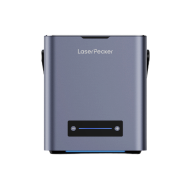
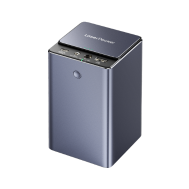
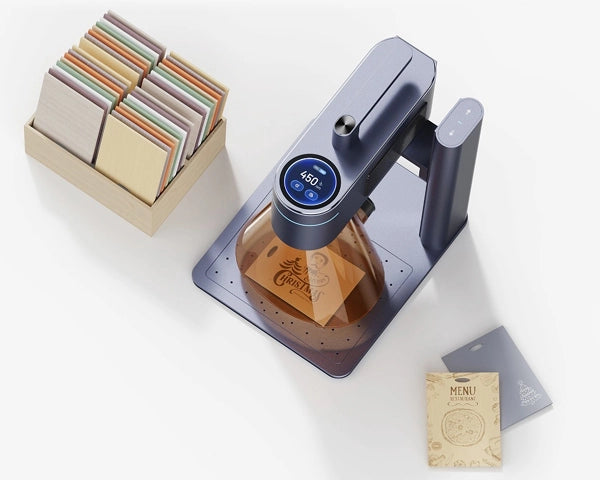
With the LaserPecker LP4, you can create laser-engraved hoodies with precise and professional results. Here's how to proceed:
Step 1: Prepare Your Design
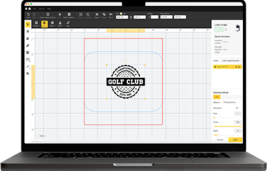
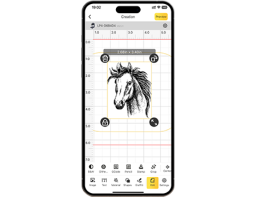
Create your motif with software like Illustrator, Canva, or the LaserPecker app. Use clear lines and adjust the size to the desired area of the hoodie, for example, the chest, sleeves, or back.
Step 2: Set Up the LP4
- Lay the hoodie flat on a stable surface.
- Adjust the LP4's focus so that the laser dot is sharp on the fabric.
- Connect the device via Bluetooth or USB to your smartphone or computer.
Step 3: Perform a Test Engraving
Always test the motif first on a fabric scrap with a comparable composition. Adjust speed and power to achieve a clear result without burning the material.
Step 4: Engrave the Motif
- Secure the hoodie so it doesn't shift during processing.
- Start the engraving via the app.
- The LP4 transfers the motif precisely onto the fabric.
Step 5: Post-Processing
Carefully remove any loose residue. Then your personalized hoodie is ready.
Part 4: Common Mistakes to Avoid
1. Choosing the Right Material: Avoid pure polyester and very thin fabrics that can easily melt. Hoodies made from 100% cotton or cotton-fleece blends usually yield more consistent and higher-contrast engravings.
2. Always Test First: Every fabric reacts differently to the laser. Therefore, always perform a test engraving beforehand.
3. Ensure Sufficient Color Contrast: On very light fabrics, a light engraving might be barely visible.
4. Start with low laser power: Too much power can cause holes or severe burn marks. Therefore, only increase the power gradually.
5. Work safely: Wear suitable eye protection and ensure effective extraction or good ventilation when engraving.
Part 5: FAQs for Making Personalized Hoodies
Q1. Does laser engraving work on every hoodie material?
Not equally well on every material. Natural fibers such as cotton or fleece often produce clear and high-contrast results. Polyester and other synthetic fibers can melt or discolor if the laser power is too high. Blended fabrics can also be engraved to some extent, but should always be tested on an inconspicuous area first.
Q2. Can I safely use a laser engraver at home?
Yes, provided you follow the manufacturer's safety instructions and use appropriate protective measures. These include a protective cover, effective extraction or good ventilation, and the prescribed safety glasses. Never leave the device unattended during operation.
Q3. How long does it take to fully personalize a hoodie?
The duration depends on the size and detail of the design as well as the material of the hoodie. Small lettering or logos can take a few minutes, while larger and more complex designs take longer. The high engraving speed of the LP4 of up to 4,000 mm/s supports an efficient workflow.
Q4. How can I design a hoodie online?
With online providers, you first select the hoodie model, color, and size. Then you upload text, a logo, or an image, or create the design directly with the integrated design tool. You can often adjust the position and size and view a preview.
Then you choose the finishing method. For colored designs, printing or embroidery are suitable, for example. Finally, check the preview and place the order. The hoodie is then custom-made and shipped.
Q5. How can I personalize a hoodie with images?
Images can be transferred to a hoodie using transfer printing, DTF, screen printing, or laser engraving, among other methods. Printing processes enable vibrant colors and photorealistic designs. Laser engraving, on the other hand, works without ink and creates a permanently textured mark directly on a suitable fabric.
Conclusion
Personalized hoodies are more than just clothing. They show personality, interests, and brand identity. From hand painting and embroidery to various printing processes and laser engraving, numerous options are available to realize your own ideas.
Those who value durable, precise designs and low running costs can consider laser engraving with a device like the LaserPecker LP4. The method is suitable for creative DIY projects as well as for small brands and small series.
Choose a suitable hoodie, prepare your design, and start with your own design – step by step and according to your style.